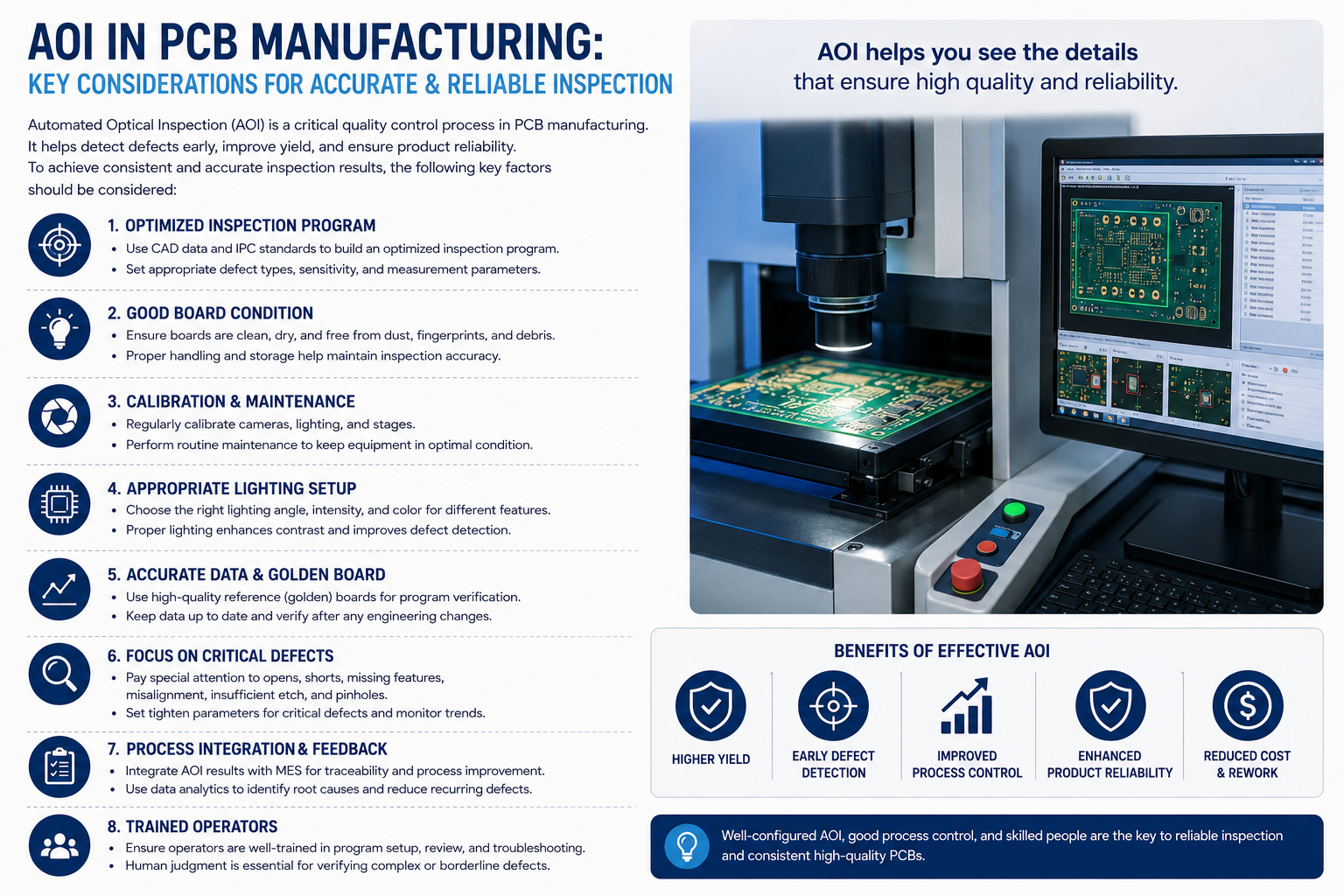

AOI in PCB Manufacturing: Key Considerations for Accurate and Reliable Inspection
Key Considerations for Effective AOI Inspection
1. Optimized Inspection Programs
An effective AOI system starts with a well-designed inspection program.
Inspection parameters should be configured based on:
- PCB design specifications
- IPC standards
- Customer requirements
- Critical feature dimensions
Proper programming helps reduce false calls while ensuring real defects are accurately detected.
2. Board Surface Condition
Before inspection, PCB panels should be clean and free from dust, fingerprints, oxidation, or residues.
Contaminants on the board surface can affect image recognition and increase false rejection rates.
Proper handling and storage practices help maintain inspection accuracy.
3. Equipment Calibration and Maintenance
Regular calibration is essential for maintaining AOI accuracy.
Manufacturers should periodically verify:
- Camera resolution
- Lens focus
- Lighting intensity
- Motion stage accuracy
- System alignment
Routine preventive maintenance ensures long-term equipment stability and reliable inspection performance.
4. Proper Lighting Configuration
Lighting is one of the most important factors affecting AOI performance.
Different PCB features require different lighting conditions to achieve optimal contrast.
By adjusting light angle, intensity, and color, AOI systems can better detect:
- Fine copper traces
- Solder mask defects
- Missing features
- Surface scratches
- Pattern irregularities
Optimized lighting significantly improves inspection accuracy.
5. Accurate Reference Data
AOI systems rely on high-quality reference data, often referred to as a "Golden Board" or CAD dataset.
Manufacturers should ensure that:
- Reference files are verified
- Engineering changes are updated promptly
- Program revisions are properly managed
Accurate reference data minimizes false alarms and improves inspection consistency.
6. Focus on Critical Defects
Not all defects carry the same level of risk.
Inspection programs should prioritize critical defects such as:
- Open circuits
- Short circuits
- Missing copper
- Registration errors
- Insufficient etching
- Broken traces
Trend analysis of recurring defects can also help identify root causes and improve process capability.
7. Integration with Manufacturing Data
Modern smart factories integrate AOI systems with MES and quality management systems.
This enables:
- Real-time defect tracking
- Statistical Process Control (SPC)
- Production traceability
- Continuous process improvement
- Faster root cause analysis
Data-driven manufacturing helps reduce variation and improve overall quality performance.
8. Skilled Engineers and Operators
Although AOI is highly automated, experienced engineers remain essential for reviewing borderline defects, optimizing inspection programs, and minimizing false calls.
Continuous training ensures that both equipment and personnel deliver the highest inspection standards.