
What Should You Pay Attention to During PCBA Assembly?
When it comes to electronic manufacturing, even the smallest detail can make a big difference. A reliable Printed Circuit Board Assembly (PCBA) isn't achieved by chance—it's the result of strict process control, quality management, and continuous improvement throughout every production stage.
Here are some of the key factors that every PCBA manufacturer should focus on:
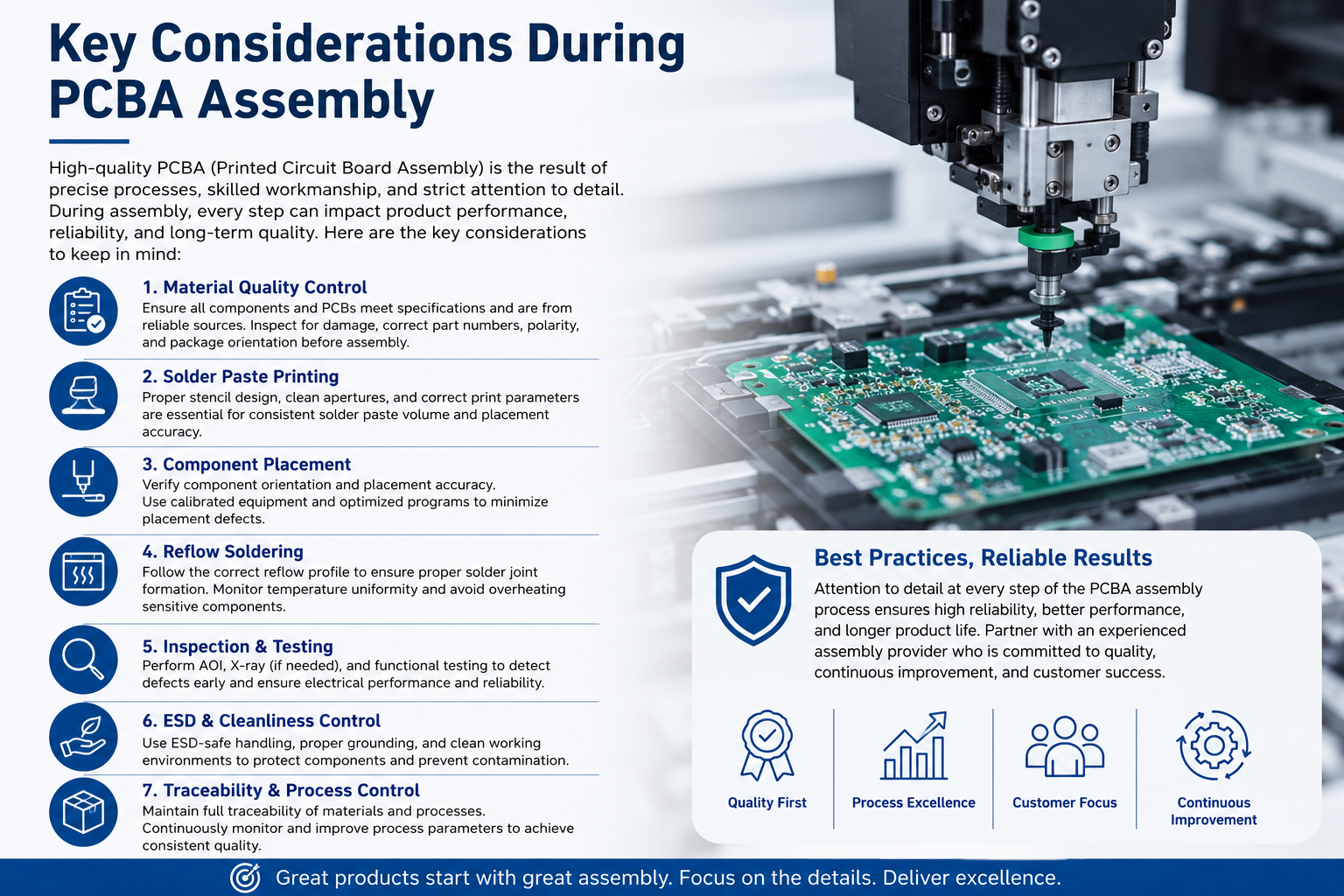
✅ 1. High-Quality Components
Quality starts with the materials. Every PCB and electronic component should be inspected before assembly to ensure correct specifications, authenticity, and traceability. Reliable components are the foundation of a reliable product.
✅ 2. Accurate Solder Paste Printing
Solder paste printing directly affects solder joint quality. Proper stencil design, consistent paste volume, and regular SPI (Solder Paste Inspection) help reduce defects such as solder bridges and insufficient solder.
✅ 3. Precision Component Placement
Modern SMT equipment provides exceptional placement accuracy, but regular machine calibration, feeder maintenance, and program verification remain essential to ensure every component is positioned correctly.
✅ 4. Optimized Reflow Soldering
A well-controlled reflow profile is critical for creating strong, reliable solder joints. Proper temperature management prevents cold solder joints, overheating, and component damage.
✅ 5. Effective ESD Protection
Electrostatic discharge (ESD) can silently damage sensitive electronic components. ESD-safe workstations, grounding systems, and proper operator training are essential for protecting product reliability.
✅ 6. Comprehensive Inspection & Testing
Quality should never rely on a single inspection method. Combining AOI, X-ray inspection (when required), ICT, functional testing, and visual inspection helps identify defects before products reach customers.
✅ 7. Full Process Traceability
Complete traceability—from component sourcing to final testing—not only improves quality management but also enables faster root-cause analysis and continuous process improvement.
Why It Matters
A high-quality PCBA doesn't simply reduce defects—it improves product reliability, extends service life, lowers maintenance costs, and enhances customer satisfaction.
In today's competitive electronics industry, consistent quality is one of the most valuable advantages a manufacturing partner can offer.
At FMX, we are committed to delivering reliable PCB assembly solutions through advanced manufacturing equipment, strict quality control, and experienced engineering support. From prototype builds to high-volume production, our goal is to help customers bring dependable electronic products to market with confidence.
What do you think is the biggest challenge in PCBA manufacturing—component quality, soldering, testing, or process control? We'd love to hear your thoughts in the comments.