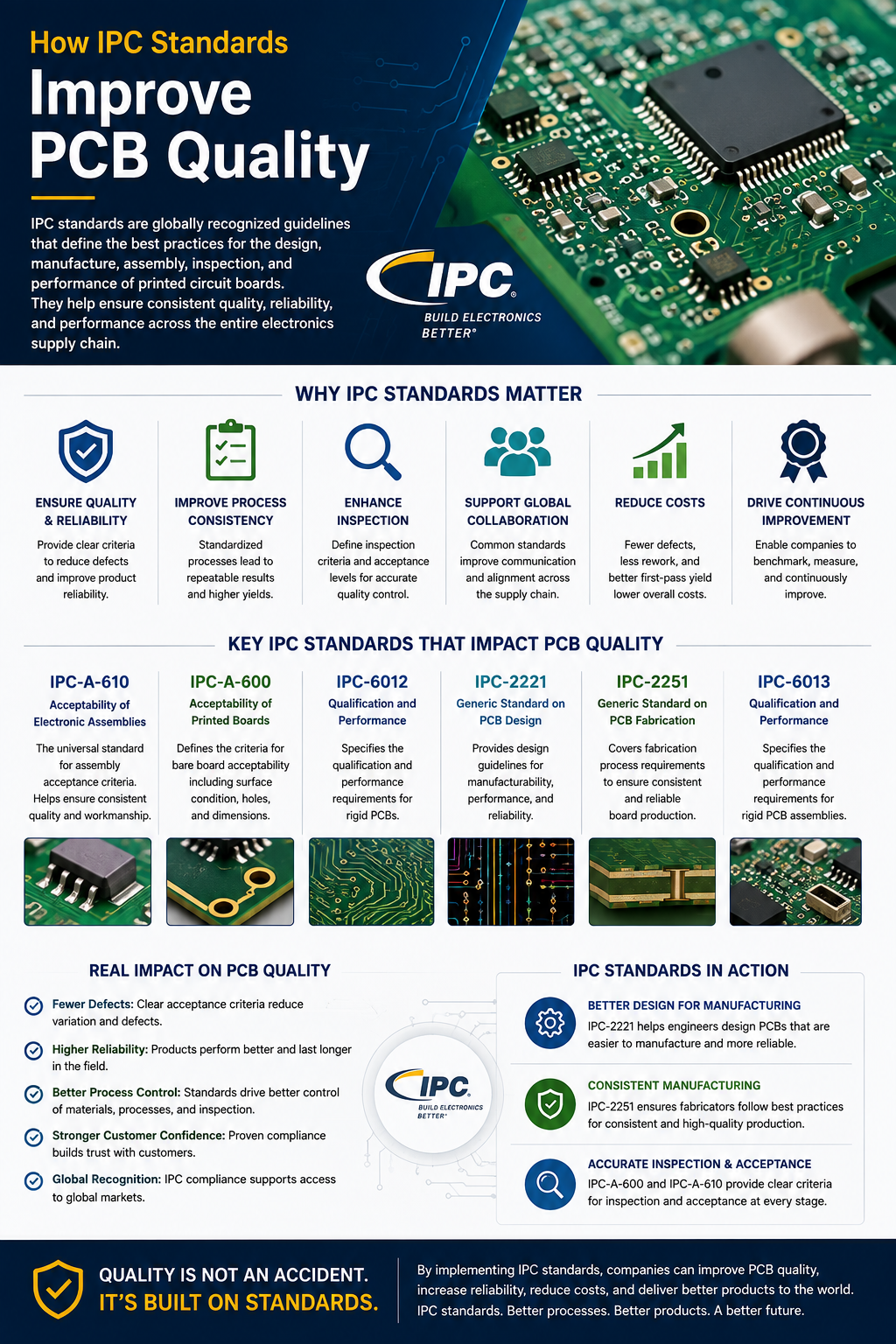

How IPC Standards Improve PCB Quality and Reliability
IPC is a global organization that develops standards for the electronics industry. Its standards provide common technical requirements and acceptance criteria covering many aspects of PCB design, manufacturing, assembly, and testing.
For PCB manufacturers, IPC standards help establish a common language between:
- PCB designers
- Material suppliers
- PCB manufacturers
- PCBA manufacturers
- Quality engineers
- OEM customers
- Inspection teams
This common framework helps reduce misunderstandings and ensures that quality expectations are clearly defined.
IPC standards play an important role in improving PCB quality, consistency, and reliability.
From PCB design and fabrication to inspection and assembly, standardized requirements help manufacturers establish clear expectations and maintain stable processes.
For customers, IPC-based quality systems provide greater confidence in product consistency and reliability. For manufacturers, they provide a structured framework for process control, defect prevention, and continuous improvement.
As PCB technology continues to evolve toward higher density, finer features, faster signal speeds, and greater reliability, the importance of standardized manufacturing practices will only continue to grow.
Quality is not an accident. It is built through standards, precision, process control, and continuous improvement.